
If you’re chasing the best settings for Valorant, this guide will sharpen your aim and smooth every frame. Therefore, let’s focus on performance and stability.
Read connection fixes early in How to Fix Valorant Lag, Packet Loss and FPS Drops for a rock-solid base.
What is best settings for Valorant? It’s the balance of visuals, FPS, sensitivity, and stable routing that makes every input land. Moreover, it’s the combo pros refine daily to win tight rounds.
How graphics choices impact reactions – best settings for Valorant
Why visuals affect time-to-kill
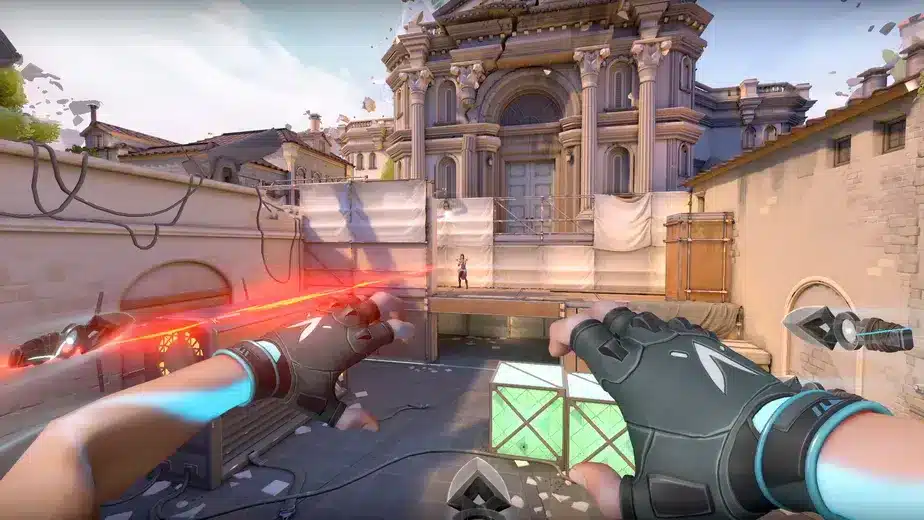
Lower effects reduce render time and input delay. Consequently, your flicks feel cleaner and tracking stays consistent.
What to disable or tune first
Turn off shadows, bloom, distortion, and vignette. Besides, keep anti-aliasing on None and anisotropic filtering at 1× for pure clarity.
• Use Fullscreen to minimize overhead.
• Match FPS to monitor refresh (144 Hz or 240 Hz).
• Prefer stable frames over pretty effects.
Additionally, cross-check tips with Best Graphic Settings to Play Valorant With No Lag for deeper tweaks.
Hardware and display for competitive fluidity
Monitors, FPS caps, and smooth motion
High-refresh displays multiply perceived smoothness. Therefore, aim for a steady 144+ FPS to fully leverage your panel.
Small upgrades that punch above weight
Move to 16 GB RAM and install an SSD for faster loads. Furthermore, keep GPU drivers updated and disable overlays to free resources.
- Update Windows and chipset drivers.
- Close launchers, recorders, and cloud sync.
- Reboot router and PC before ranked.
- Retest FPS after each change.
Meanwhile, learn fundamentals in the Valorant Beginners Guide to align mechanics with tech gains.
Network, ping, and real match consistency

Why routing matters as much as FPS
Good frames with bad routes still miss shots. Consequently, prioritizing ping stability is as critical as GPU tuning.
Practical latency checklist
Use Ethernet instead of Wi-Fi and stop background downloads. Additionally, pick the nearest Riot server, or optimize routes with ExitLag when paths are inconsistent. For quick wins, see Fix Valorant Lag Fast and Reduce High Ping.
• Keep idle ping under ~30 ms for ranked.
• Avoid peak-hour congestion when possible.
• Test packet loss before scrims.
Also, confirm official requirements and support at Riot Games for authoritative references.
Tuning inputs like the pros
Turning pro insights into daily habits
Players using Valorant pro settings minimize visual clutter and latency. Therefore, mirror those habits to stabilize mechanics under pressure.
Sensitivity, DPI, and consistency
Stay within 400–800 DPI and a low-to-mid eDPI for control. Moreover, keep Windows pointer speed default to avoid acceleration surprises.
• Disable raw Windows acceleration unless intentionally using it.
• Keep polling rate high, but verify stability on your USB hub.
• Align in-game sens with aim trainers to cement muscle memory.
Additionally, build fundamentals with Valorant Ranked: Tips & Strategies for match-ready routines.
Crosshair clarity and visibility
Simple marks beat flashy shapes
A thin, static cross with high contrast improves reads. Consequently, you acquire heads faster in chaotic firefights.
Codes, colors, and testing
Use cyan, green, or magenta for strong map contrast. Furthermore, iterate in the Range before ranked queues. Explore layouts in Valorant Crosshair Settings: Enhance Your Gameplay and Valorant Crosshair: Customize Your Aim.
• Keep outlines subtle but visible.
• Set center gap to avoid bloom overlap.
• Save multiple profiles for maps and agents.
Besides, review minimap size and colorblind options to improve info parsing.
Gear and ecosystem around performance
Mice, pads, and keyboards that help aim
Light mice with grippy pads reduce micro-corrections. Therefore, pick shapes that match your grip style and hand size.
Headsets and audio queues
Clear positional audio shortens reaction chains. Moreover, tuning EQ for footsteps and reloads yields earlier info.
• Research best gear Valorant to avoid novelty traps.
• Track what the best Valorant player meta prefers for consistency.
• Compare configs labeled best Valorant settings to understand trade-offs.
Additionally, don’t overlook the misspelled searches like best settigns for Valorant, since community guides often tag both spellings.
Sensitivity, DPI, and Raw Accel Optimization
Understanding mouse sensitivity fundamentals
Sensitivity defines how much distance your aim covers per inch of mouse movement. Consequently, wrong values can ruin muscle memory and tracking. Moreover, the best settings for Valorant start by syncing your hand movement with your screen speed.
What is the best raw accel settings for Valorant
Raw acceleration adjusts how cursor speed scales with mouse motion. When properly tuned, it maintains fluidity without sacrificing accuracy. Therefore, advanced players enable Raw Accel with minimal gain for micro-precision.
• Use 0.05–0.2 gain values for low DPI setups.
• Avoid extreme acceleration to keep linear aim control.
• Combine with in-game sens between 0.35 and 0.45 for balance.
To learn how pros calibrate acceleration, see Valorant Pro Settings and Gear Guide.
DPI, polling rate, and uniform muscle memory
High DPI (800–1600) reduces pixel skipping, while a 1000 Hz polling rate minimizes delay. Meanwhile, avoid inconsistent surfaces or small mousepads. Hence, performance gear complements your software tweaks perfectly.
Check advanced optimization advice in How to Boost FPS in Valorant to reinforce precision while keeping smooth frame times.
Crosshair Mastery and Pro-Level Visibility

What are the best crosshair settings for Valorant
Simple designs dominate competitive play. A static, centered crosshair ensures quick head placement. Moreover, shapes with no movement distractions prevent visual clutter during sprays.
How to customize and test effectively
Experiment in The Range before ranked. Therefore, adapt to your recoil patterns and weapon of choice. Keep your Firing Error off for rifles but on for pistols, to recognize inaccuracy windows.
Try patterns shared in Valorant Crosshair Codes You Should Try. Additionally, rotate between two crosshairs — one minimal for rifles, one thicker for close-range SMG fights.
Color and contrast for clarity
Select neon colors like cyan or yellow-green for visibility on all maps. Besides, disable outlines if they blend with background lighting. Combine those settings with lower bloom for crisp alignment.
Keybinds and HUD Customization
Why bindings define speed under pressure
Smooth mechanics depend on how comfortably you reach keys. Hence, replicate layouts used by the best Valorant player profiles but adapt for ergonomics.
Layout refinement checklist
• Keep ability keys close to WASD to minimize finger travel.
• Set reload and melee on distinct keys to prevent overlap.
• Disable weapon scroll swap for consistent muscle memory.
Learn ergonomic setups in Valorant Keybinds Explained: How Pros Play Faster.
HUD clarity and performance
Simplify your UI to reduce distractions. Therefore, minimize mini-map opacity, disable unnecessary visual clutter, and move chat logs to corners. The goal is zero wasted attention.
For step-by-step visual tweaks, review Valorant Settings Guide: Master Every Option.
Advanced Gear Synergy
Building the perfect combo
Your gear must translate intent into accuracy. Accordingly, balance mouse weight (under 70 g), low-latency keyboard switches, and a precision mousepad. Also, make sure your monitor’s overdrive is tuned to prevent ghosting.
Pro setups for competitive edge
Top teams rely on 144–240 Hz monitors paired with best gear Valorant configurations. Therefore, research setups that match your mechanics and playstyle. Review the latest analyses in Best Gaming Gear for Valorant.
Additionally, maintaining uniform ergonomics prevents fatigue during long scrims. Position your monitor at eye level, wrist neutral, and mousepad aligned with forearm movement.
Game Sense and System Optimization

Reading audio and visual cues
Beyond mechanics, awareness decides outcomes. Hence, amplify critical sounds (steps, reloads, spikes) while suppressing ambient noise. Additionally, avoid cluttered sound mixes with virtual 7.1 if unnecessary.
Adjust your EQ to favor midrange frequencies — it helps detect footsteps early. You can explore proper configurations inside How to Fix Sound Delay and Audio Lag in Valorant.
Maintaining peak performance
Restart Valorant between sessions to clear cache buildup. Meanwhile, check CPU temperatures and close browser tabs before queues. Furthermore, apply ExitLag for stable routing during extended ranked grinds.
These optimizations ensure your best Valorant settings don’t degrade over time. Additionally, pairing them with high-refresh monitors keeps motion blur minimal.
What are the best graphics settings for Valorant
Reinforcing FPS and visual balance
Use the same minimalistic principles described earlier, but refine shadows and anti-aliasing per environment. For instance, low anti-aliasing on Ascent improves clarity under skyboxes.
Moreover, texture settings can remain low without hurting enemy visibility. However, avoid disabling detail quality entirely — it may affect object outlines.
Combining visuals and network for pro consistency
The best performance blend happens when stable routing meets low GPU latency. Therefore, if occasional spikes occur, check background bandwidth or VPN conflicts.
For holistic fine-tuning, follow How to Optimize Valorant for Maximum FPS.
Frequently Asked Questions (FAQ)
Keep all graphics on Low except textures and UI on Medium for clarity. Disable shadows, bloom, vignette, and V-Sync to improve FPS and responsiveness.
Use Fullscreen mode, aim for stable 144 FPS or higher, and always connect via Ethernet instead of Wi-Fi for better latency and consistency.
There’s no single setup for everyone, but the key is maximizing FPS, minimizing lag, and keeping visuals simple and clear across all maps.
Use a small, static crosshair in bright colors like cyan or green. Turn off movement error and outlines that might blend with the map.
Set Raw Accel gain between 0.05 and 0.20 to maintain precision while allowing smooth micro-adjustments. Combine with 800–1600 DPI for balance.
Pros play with low graphics, Fullscreen, raw input on, and 1000 Hz polling rate to eliminate delay and ensure consistent aim.
Lightweight mice, linear mechanical keyboards, and 240 Hz monitors offer better accuracy, reaction speed, and comfort during long matches.
Despite the typo, it refers to reducing lag, raising FPS, and keeping gameplay smooth with balanced graphic and network settings.
Top players like TenZ, aspas, and Derke dominate tournaments using optimized setups focused on precision and stability.
Combine optimized graphics, tuned sensitivity, and a stable connection. High FPS and low ping together define the ideal setup for competitive play.
How ExitLag elevates performance – best settings for Valorant
Every second counts in tactical shooters. Consequently, ExitLag routes your traffic through multi-path optimization, reducing latency and preventing rubber-banding.
Whether grinding ranked or testing new agents, low latency ensures actions register instantly. Furthermore, its real-time route selection guarantees the shortest connection to Riot servers.
Combining ExitLag with your fine-tuned FPS setup maximizes both mechanical and network performance. Hence, you can maintain precision during chaotic duels and clutch moments — achieving the ultimate balance that defines the best settings for Valorant.
Got questions or want to connect with other players? Join the conversation at the ExitLag Forum!